The Revolution in Medicine – Part I


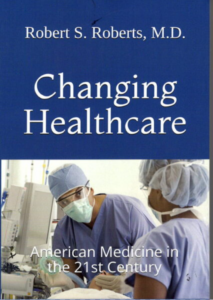
There is a revolution taking place in medicine and it forebodes poorly for the future of patient healthcare. I’ve written about changes in healthcare in the past and have even published a book, Changing Healthcare, to discuss some of what is happening.

When I began my practice in 1984, most doctors were self-employed or employed by other doctors. The only doctors who weren’t were mostly pathologists and radiologists who worked for hospitals. Today, about 70% of all doctors are employed by hospitals, large healthcare systems, or the government.

What is the impact of this change?

Simply put, doctors are no longer in control of their decisions about treating patients. They are pressured by the employers they work for to save money by limiting costly expenses or make money by performing costly procedures. Money has become the driving influence in healthcare whereas before the patient’s welfare generally came first. Doctors are trained to do what’s best for their patients, but when others have the final say, the patient’s best usually gets forgotten.

To add to this mess, patients are losing trust in their doctors, and in scientists in general. According to Pew Research, the number of U.S. adults who place confidence in medical scientists to act in the best interests of the public declined from 40 percent in 2020 to 29 percent in 2022. You can thank the Covid pandemic for this decline in trust. However, even 40 percent is much lower than the confidence people had in their doctors fifty years ago.

All of this is driving doctors to retire early or leave the profession for greener pastures. I’ve written about the doctor shortage before (Physician Shortage Getting Worse – 2024) so I’ll not belabor that issue here. But there is new information that further explains this decline.

There is a new revolution taking place in medicine that some have called the managerial revolution. Aaron Kheriaty, a physician and fellow at The Ethics and Public Policy Center, writing in The Epoch Times tells us that medicine, like many other contemporary institutions since WWII, has succumbed to managerialism – the unfounded belief that everything can and should be deliberately engineered and managed from the top down. He says, “Managerialism is destroying good medicine.”

The managerialist ideology consists of several core tenets, according to Washington-based writer and analyst N.S. Lyons. The first is technocratic scientism, or the belief that everything, including society and human nature, can and should be fully understood and controlled through materialist scientific and technical means, and that those with superior scientific and technical knowledge are therefore best placed to govern society.

This is a new concept in medicine, but one that has been prevalent in politics for some time. Angelo Codevilla, professor at Boston University, wrote about this in 2010 in a book entitled The Ruling Class. In it he warns us there is an elite group of individuals from both political parties who see themselves as the only ones fit to make decisions for the people “for the good of the country.” This antidemocratic ideology has infiltrated our political system and is a real threat to our democracy.

The same way of thinking threatens our healthcare system as doctors are forced into a one-size-fits-all mentality that may be good for business but not so much for patients. As any physician knows, every patient is an individual and decisions based on the population as a whole rarely are best for that patient.

How does this way of thinking manifest itself in medicine?


(Note: I’ll discuss the answer to this question in the next post.)

Assisted Suicide in Canada – Part II


In Part I of this series, we discussed the fact that physicians are taught to “first do no harm.” To assist someone in committing suicide is a violation of that training and neither noble nor natural. It is actually playing God, since God is the creator of all life and only He should have the last word on when life ends. All those who live by the values of Judeo-Christian teaching and the Bible would agree.

But some disagree. Assisted suicide is now available in ten states plus the District of Columbia. The late great Washington Post columnist, Charles Krauthammer wrote in 1997, “When you see someone on a high ledge ready to jump, you are enjoined by every norm in our society to tackle him and pull him back from the abyss.” We are being asked to become a society where, when the tormented soul on the ledge asks for our help in granting him relief, we oblige him with a push,” wrote Krauthammer when reflecting on the oral arguments of Vacco v. Quill, in which the Supreme Court eventually ruled the Constitution doesn’t create a right to that procedure.

But Canada has pushed even farther down this slippery slope than the United States. Nicholas Tomaino, writing in The Wall Street Journal, tells us the Canadian Parliament has made it easier than ever to obtain assisted suicide, dropping safeguards such as the minimum 10-day assessment period between request and provision. It also proposed mental illness as an eligible condition, the implementation of which the government has delayed until 2027. It seems their message is “If you want to die, you needn’t wait.”

But there are consequences to this policy. The consequence, Ethics and Public Policy Center fellow Alexander Raikin notes in a new study, is that what was meant to be exceptional has become routine. Using two government data sets, he estimates the program is at least the fifth-leading cause of death in Canada, claiming a reported 13,241 lives in 2022, up from 1,018 in 2016.

Mr. Raikin notes the government believed doctors wouldn’t merely rubber-stamp applications. Yet in 2022 more than 81% of petitions resulted in death, including for “vision/hearing loss” and “diabetes.” He documents that the percentage of denied written requests has been falling for years, from 8% in 2019 to 3.5% in 2022, even as the number of applications has increased. The upshot has been that 44,958 people have been put to death between 2016-22. One estimate, published in the New England Journal of Medicine in 2020, predicted that “approximately 2,000 euthanasia” cases could be expected annually. The MAID toll that year was 7,611. Thus “either in absolute numbers or when weighed as a percentage of deaths,” Canada has the “fastest-growing assisted-dying program” in the world.

Roger Foley, who suffers from a degenerative neurological disorder, cerebellar ataxia, has witnessed MAID since its infancy. In 2009, as Mr. Foley’s condition worsened, he resigned from his job at the Royal Bank of Canada. After several years in home care, in which he claims he was mistreated, he was placed in a mental-health ward.

“I became extremely suicidal,” Mr. Foley, 48, says in a Zoom interview from his bed in the hospital, where he’s lived since 2016. After he shared those thoughts with staff, he says they began to float the idea of euthanasia. That alarmed him, so he began to record conversations secretly. He later shared them with Canadian journalists.

In one, a hospital ethicist threatens Mr. Foley with denial of insurance coverage and says it would cost him “north of $1,500 a day” to stay in the hospital. When Mr. Foley protested, the ethicist retorted: “Roger, this is not my show. My piece of this was to talk to you about if you had interest in assisted dying.” He didn’t. “I have a passion to live,” Mr. Foley says. He wants to volunteer and write songs. Many people like to “use the term ‘end suffering,’ ” he says. In practice, that means “Don’t help the sufferer, end the sufferer. “ ”I deal with a lot of pain every day,” he says, “but you can’t give up at the point of any problem—you’re still of value, your life has value.”

Mr. Tomaino says, “Mr. Foley isn’t religious, but to my Catholic ear, it sounds as if he’s saying life is sacred. Canada’s healthcare system wants not only to give up on him, but to compel him to give up on himself.”

Congratulations to Mr. Foley for standing up against those who would push him into assisted suicide – for their own misguided agenda. Yet as he rejects MAID, others seek to open its doors wider still. On August 19, an organization called Dying With Dignity filed suit in Ontario Superior Court, claiming that preventing assisted dying for mental illness is discriminatory. Tomaino warns, “That may not sound dignified – but, as Krauthammer saw, it is logical.”

The plain truth is when man decides to play God, there is no limit to what evil he can do.

Assisted Suicide in Canada – Part I


Even those who have never been to medical school know that all physicians are taught “first do no harm.” It’s not a part of the Hippocratic Oath, as some believe, but it is certainly a part of every medical student’s training.

Assisted suicide is a direct betrayal of this training. While some would rationalize that helping those who are suffering die is compassionate, I would say it’s really playing God. Only God can grant life and only God should determine when life ends. Anyone with Judeo-Christian values would agree. The late great Washington Post columnist, Charles Krauthammer wrote in 1997, “When you see someone on a high ledge ready to jump, you are enjoined by every norm in our society to tackle him and pull him back from the abyss.”

Nicholas Tomaino, writing in The Wall Street Journal, tells us suicide is neither noble nor natural. That principle became less clear with the advent of physician-assisted suicide. Krauthammer was writing about Vacco v. Quill, in which the Supreme Court would hold unanimously that the Constitution doesn’t create a right to that procedure. “We are being asked to become a society where, when the tormented soul on the ledge asks for our help in granting him relief, we oblige him with a push,” Krauthammer wrote, reflecting on the oral arguments.

Laurence Tribe, who argued the case for the plaintiffs, suggested the slope wouldn’t be so slippery. The procedure would be granted to the patient with end-stage heart failure, not the man on the ledge. At the same time, Mr. Tribe posited that people at the “threshold at the end of life” enjoy the liberty to decide how they die. Krauthammer spotted the argument’s hole. Why couldn’t the chronically ill “who face a lifetime of agony,” or the “healthy but bereft,” avail themselves of the same right?

Assisted suicide came to the U.S. in the 1990s through the efforts of Dr. Jack Kevorkian, a misguided physician from Michigan who assisted over 40 people in dying by suicide. His first public assisted suicide was in 1990 of Janet Adkins, a 54 -year-old woman diagnosed with early-onset Alzheimer’s disease in 1989. (Today there are new medications to slow and even reverse the effects of this devastating disease.) In 1998, Kevorkian videotaped himself giving a man a lethal injection, with the patient’s consent, and aired the tape on 60 Minutes. This was significantly different from previous cases, where it was always the patients themselves who reportedly completed the suicide process. He was found guilty of second-degree murder and served eight years of a 10–25 year sentence. He was released in 2007, and died on June 3, 2011.

 Since then, ten states and the District of Columbia have legalized physician-assisted suicide and others are considering it. (All of these jurisdictions are blue states.) Americans who are skeptical of Dr. Krauthammer’s warning might consider the experience of our neighbors to the north.

Mr. Tomaino writes that Canada has undergone a crash course in what the country calls “medical assistance in dying,” or MAID. The experiment began in 2015, when the Canadian Supreme Court ruled in Carter v. Canada that “laws prohibiting physician-assisted dying interfere with the liberty and security” of people with “grievous and irremediable” medical conditions. Parliament codified the decision the following year.

Lawmakers thought they were imposing limits. “We do not wish to promote premature death as a solution to all medical suffering,” then-Justice Minister Jody Wilson-Raybould said. The plaintiff’s lead lawyer in Carter argued that “in almost every case,” doctors will want to “help their patients live, not die.” “We know physicians will be reluctant gatekeepers.”

Yet Krauthammer was right. The Superior Court of Quebec soon ruled that MAID was unconstitutional because it required that an applicant’s death from “a grievous and irremediable medical condition” be “reasonably foreseeable.” Parliament amended its “discriminatory” regime in 2021, opening wider the door to facilitated death. The new law dropped safeguards, such as the minimum 10-day assessment period between request and provision. It also proposed mental illness as an eligible condition, the implementation of which the government has delayed until 2027. The message for everyone else remains the same: If you want to die, you needn’t wait.

(Note: To learn the consequences of this policy, read my next post – Part II.)