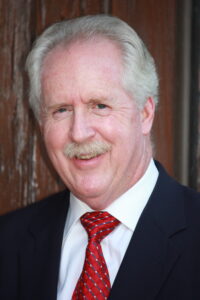
Weingarten Rewriting History


It must be the weather; or the time of the year; or perhaps it’s the clang of the gong when reality sets in. Whatever the explanation, it seems everyone is anxious to rewrite history.

The reason for this directly relates to the Republicans re-gaining control of the House of Representatives and the subpoena power that gives them. First, it was Dr. Anthony Fauci, the well-known architect of our Covid pandemic disaster when it came to lockdowns of businesses and schools in a failed attempt to prevent the spread of the virus. We still got the virus, but our economy crashed and our children lost at least a year of education. Fauci, in an attempt to pre-empt his appearance before the House granted an interview to The New York Times in which he rewrites history. I covered this in my last post, Fauci Rewriting History.

Now it’s Randi Weingarten, president of the American Federation of Teachers, the face of the teachers unions, who is also attempting to rearrange reality. The Wall Street Journal editorial board tells us, “Much still needs to be learned about the long-term health effects of Covid-19, but we already know one of the clear long-term political effects: memory loss. That’s the only way to explain why long-time advocates of pandemic lockdowns are now denying they ever supported the school and economic shutdowns that did so much harm to so many.”

As evidence to back up their statement, they point to Weingarten’s appearance last week before the House of Representatives: “Leading the amnesia parade is Randi Weingarten, the American Federation of Teachers president who attempted to erase two years of Covid history in testimony last week to the House of Representatives that was, literally, unbelievable.”

Weingarten had the audacity to say, “We spent every day from February on trying to get schools open. We knew that remote education was not a substitute for opening schools. We know that young people learn and connect best in person, so opening schools safely, – even during a pandemic -guided our actions, which I will describe in detail.” But the promised details were not forthcoming. She omitted her description in July, 2020 of the Trump Administration’s push to reopen schools for in-person learning that autumn as “this reckless, this callous, this cruel!” That summer she also endorsed teacher “safety strikes” if unions deemed local reopening protocols to be inadequate. Hundreds of private and charter schools did open that fall without the surge of illness that Ms. Weingarten claimed to fear.

She also failed to mention that local union affiliates were the most aggressive opponents of school reopening throughout 2021 and even into 2022. “We are practically begging the Chicago Teachers Union to come to the table so we can get a deal done,” Chicago’s Democratic Mayor Lori Lightfoot said in February 2021.

In Florida, where Governor Ron DeSantis ordered schools to reopen in autumn 2020, the Florida Education Association sued the state to keep them closed. The schools nevertheless reopened – much to the benefit of students who learn far better in person according to all the evidence. There are many more examples that could be quoted, but you get the idea. For Ms. Weingarten to somehow claim that unions tried hard to reopen schools is simply an attempt to rewrite their shameful history.

The WSJ editors say, “Ms. Weingarten and others are trying to rewrite history because they realize now, far too late, that their lockdowns are unpopular. The public can see the damage in lost learning and livelihoods. The lockdown lobbyists want everyone to forget it all happened, but it’s important for democratic accountability that they don’t get away with it.”

The operative phrase here is “lockdowns are unpopular.” The teachers unions aren’t shamed by the atrocious learning scores as a result of their actions; they aren’t shamed by the tragic consequences of their deeds for the lives of millions of children. They’re only concerned because the unpopularity of their actions may impact their ability to attract more members and more government spending to line their coffers.


Note: For more on Randi Weingarten, go to The New York Times magazine article entitled “The Most Dangerous Person in the World is Randi Weingarten.”

Fauci Rewriting History

Perhaps the most difficult three words to say in the English language are “I was wrong.” Admitting our mistakes is just as difficult as admitting we are flawed and sinful human beings in need of forgiveness.

The latest example of this is Dr. Anthony Fauci. Three years ago, nearly no one in America knew his name, but today he is the most well-known and recognized face in public health. In the early days of the Covid pandemic in 2020, he was on our television screens daily dishing out his advice on how to minimize the impact of a novel coronavirus we now call Covid-19.

Three years later we now know that much of that advice was simply wrong. When thousands of physicians and scientists signed the Great Barrington Declaration to register their disapproval of Fauci’s methods, he dismissed their arguments, with the help of a complacent media.

Now we see the devastating results of his school lockdowns in declining test scores and grade deficiencies throughout our nation. Many children have lost at least a year of their education, a loss that may have devastating impact on their futures. Despite his advice, thousands died of Covid anyway and the economy crashed. Masks have been shown to be virtually worthless in most situations and the vaccines, while good at preventing fatal disease, did little to slow the spread of the virus. Most of what Fauci told us proved to be wrong.

But now he is trying to rewrite history. James Freeman, writing in The Wall Street Journal, says the country’s most forceful advocate for shuttering U.S. society is pretending he was inconsequential. Freeman says, “To make his new case, Dr. Fauci has chosen the friendly forum of the New York Times, which also isn’t eager to accept responsibility for panicked responses to Covid. To expose the falsity of Dr. Fauci’s attempt to avoid responsibility for the consequences of his actions and advice, one doesn’t even need to look beyond the pages of the New York Times. Not that the paper was holding him to account. He was often cast as a heroic figure as he pushed back against those who tried to warn of the great harms of closing society. Dr. Fauci wasn’t deferring to economic experts or even to medical experts who didn’t share his Covid prescription – he was using his powerful perch to forcefully rebut them. And he largely succeeded, to the great detriment of America’s children.”

Fauci, and his fellow government disease doctor Deborah Birx, seemed to have no ability to view the larger issues, being solely focused on Covid. As a result, other threats to health, such as mental illness and cancer, skyrocketed in the wake of reduced access to mental health and primary care physicians. Rates of depression, suicide and drug abuse accelerated due to the lockdowns but these other health hazards garnered little attention from Fauci and Birx. Cancer screenings plummeted, so naturally cancer deaths rose since early detections were eliminated.

Dr. Fauci, who spent a career as an unelected head of a government agency, now claims he never criticized those who had to make decisions. But at the time he felt comfortable challenging even those who were both elected officials and medical doctors. The New York Times reported:

“If we keep kids out of school for another year, what’s going to happen is the poor and underprivileged kids who don’t have a parent that’s able to teach them at home will not get to learn for a full year,” said Senator Rand Paul, Republican of Kentucky. Dr. Fauci pushed back, saying that the virus’s effect on children is still not well understood, and that recent cases of children who have tested positive and developed a serious inflammatory syndrome was worrisome. “We really better be very careful, particularly when it comes to children,” he said.

Too bad he didn’t listen to Senator and Dr. Rand Paul.

Keys to Happiness


Are you happy? It may seem like a strange question, especially in a time of high inflation, a deeply divided country, and rising violence, but it’s really fundamental.

According to the latest Wall Street Journal – NORC poll, the happiest people in America have a few traits in common: They value community and close personal relationships. They tend to believe in God. And they generally are older, often in their retirement years. The poll found that a small group of Americans, just 12%, describe themselves as not just happy, but “very happy.”

Apparently, Americans aren’t a particularly happy bunch. The 12% was the smallest share of “very happy” people ever recorded in the NORC’s General Social Survey, dating back to 1972. Among all 1,019 adults in the survey, large majorities said they felt pessimistic about the economy and prospects for the next generation. This is consistent with the most recent polls from January, 2023, which said 71% of Americans believe we are on the wrong track – headed in the wrong direction. This is the eighth time in the last nine NBC News surveys dating back to October, 2021, when the wrong track has been above 70%.

Some 30% rated themselves at the lowest level of happiness, saying they were “not too happy.” A majority, some 56%, said they were “pretty happy.” All this makes the slice of “very happy” people stand out. What do they know that the rest of Americans don’t?

Overwhelmingly, the very happy value strong relationships. Some 67% say marriage is very important to them, regardless of their own marital status, compared with 43% of respondents overall. They tend to say belief in God is important. Two-thirds describe themselves as very or moderately religious, compared with less than half of adults overall. Community involvement rates as more important among the very happy than among those who report lower levels of happiness. And while many of the very happy are satisfied with their personal finances, as a group they don’t attach high importance to money.

I recently attended the funeral of a woman who died in her 100th year of life. She died in a posh retirement home surrounded by her very successful and rich son and his family, who live in a very wealthy community where she and her husband also lived until her last few years. She wrote a book near the end of her life in which she fondly remembered her early years growing up dirt poor in southern Alabama as the happiest years of her life. Money doesn’t guarantee happiness.

Characteristics of the “Very Happy”

  • Value strong relationships – especially marriage
  • Belief in God is important
  • Community involvement is important
  • They tend to be older and female


The survey and follow-up interviews pointed to what doesn’t matter to their happiness. Many very happy people say they follow politics and are distressed by the state of civic life, but the group includes both Trump voters and Biden supporters. Neither political party claims a disproportionate share of the very happy.

As a group, the very happy aren’t without challenges. Some are facing problems, such as helping a child face cancer or divorce. In interviews, many said that they felt their happiness was partly built into their personalities, partly controlled by choices they make in their daily lives. One common interest – fitness. The very happy tend to be older. Those ages 60 and above accounted for 30% of people in the survey but 44% of the happiest group. The responses of the “very happy” people seem to have little to do with the state of affairs in our nation. In other words, these people are able to rise above their circumstances when it comes to their state of happiness.

“Not that I speak from want; for I have learned to be content whatever the circumstances. I know how to get along with humble means, and I know how to live in prosperity; in any and every circumstance I have learned the secret of being filled and going hungry, both of having abundance and suffering need. I can do all things through Christ who strengthens me.”

The Apostle Paul – Philippians 4:11-13